
Income Tax Returns Classes
Learn ITR Filing. Understand Taxation.
Build your understanding of income tax returns, tax documentation, and filing procedures with PKR Institute. Furthermore, explore important taxation concepts, including ITR forms, deductions, tax statements, and compliance-related work. These topics can help you strengthen your accounting knowledge and understand the income tax return process

Income Tax Return Filing – Course Curriculum
PAN Apply
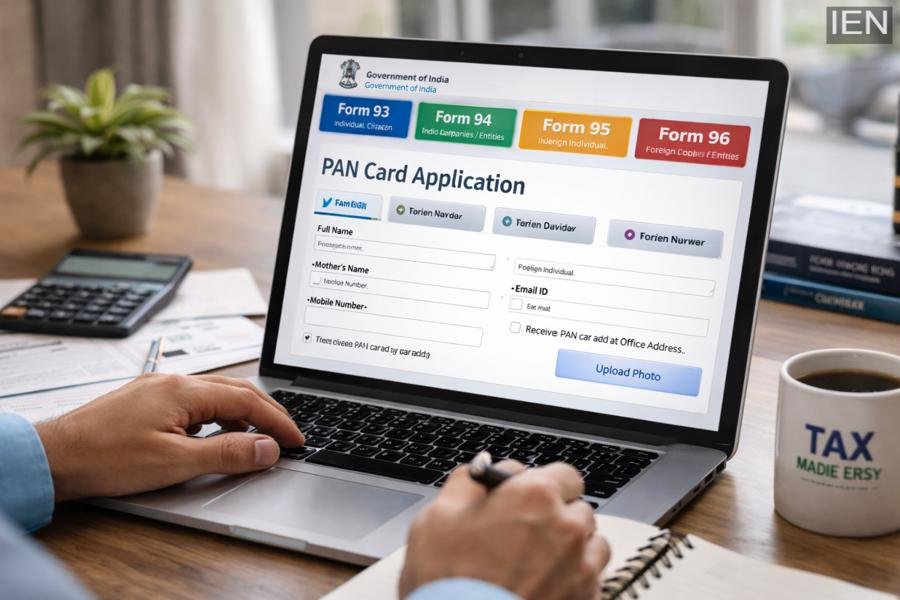
PAN (Permanent Account Number) is an important identification number used for various tax and financial transactions in India. In this topic, learners can understand the PAN application process, the importance of accurate personal details, and the documents generally required during an application. Furthermore, they can learn why PAN information should be kept updated and entered correctly in relevant tax records. As a result, this knowledge helps build a foundation for understanding income tax documentation and compliance procedures

ITR 1–7
Income Tax Return (ITR) forms are used by different categories of taxpayers to report their income and other relevant details. This topic introduces learners to ITR-1 through ITR-7 and explains their general purpose and applicability. Moreover, learners can understand how income sources, taxpayer categories, and other eligibility conditions influence the selection of an appropriate return form. Therefore, understanding these forms is an important step towards learning the income tax return filing process. The applicable form and eligibility should always be checked against the relevant assessment year’s current rules.

Chapter VI-A Deduction
Chapter VI-A of the Income Tax Act covers certain deductions that may be available when calculating taxable income, subject to applicable conditions. Through this topic, learners can understand the purpose of eligible deductions, the importance of supporting documents, and how deductions are considered during tax calculations. Additionally, they can learn why eligibility requirements and the selected tax regime must be reviewed before claiming a deduction. Consequently, this knowledge helps learners develop a better understanding of tax computation and return preparation.

Partnership Firm
A partnership firm is a business structure in which two or more partners conduct business according to their agreed terms. This topic introduces learners to the taxation and documentation requirements associated with partnership firms. Furthermore, learners can understand the importance of maintaining financial records, reviewing business income and expenses, and preparing relevant information for tax compliance. In addition, they can become familiar with the general requirements for reporting a firm’s income and completing applicable return-related procedures. Therefore, this topic supports a better understanding of business taxation and accounting documentation.

Proprietorship Firm
A proprietorship firm is a business owned and managed by an individual proprietor. In this topic, learners can explore the income tax concepts relevant to proprietorship businesses, including business income, expense records, financial documentation, and applicable return filing requirements. Moreover, they can understand why accurate bookkeeping and organized financial information are essential when calculating taxable income. As a result, learners can develop a stronger foundation for understanding taxation-related work for small businesses and individual entrepreneurs.

Trust
Trusts may have specific income tax and reporting requirements depending on their structure, purpose, activities, and applicable legal provisions. This topic introduces learners to the general taxation concepts associated with trusts and the importance of maintaining appropriate financial records. Furthermore, learners can understand why supporting documents, income details, and applicable compliance requirements need to be reviewed carefully. Consequently, this topic helps build awareness of tax documentation and reporting for trusts without assuming that every trust follows the same tax treatment.

Company Incorporation
Company incorporation is the process of legally registering a company under the applicable company law framework in India. Through this topic, learners can develop an understanding of the incorporation process, business registration documents, and the importance of maintaining accurate company information. Moreover, they can become familiar with the general role of the Ministry of Corporate Affairs (MCA) and the documents associated with company registration. Therefore, this knowledge provides a useful foundation for understanding business establishment and related compliance procedures.

ROC Work
ROC (Registrar of Companies) work relates to various statutory filings, records, and compliance requirements applicable to companies. In this topic, learners can understand the general purpose of corporate filings and the importance of maintaining updated company information. Furthermore, they can become familiar with the role of the Registrar of Companies and the need to submit relevant documents within applicable timelines. In addition, accurate records and careful document verification help support organized compliance work. Thus, this topic introduces learners to important aspects of corporate documentation and company-related administrative procedures.

Form 26AS
Form 26AS is an important tax statement that helps taxpayers review tax-related information, particularly Tax Deducted at Source (TDS) and Tax Collected at Source (TCS). Through this topic, learners can understand the purpose of Form 26AS and why its details should be reviewed while preparing an income tax return. Moreover, they can learn the importance of checking reported tax credits against relevant documents and identifying discrepancies that may require attention. Therefore, understanding Form 26AS helps develop better awareness of tax records and return verification.

AIS (Annual Information Statement)
The Annual Information Statement (AIS) provides taxpayers with a broader view of financial and tax-related information reported to the Income Tax Department. This topic introduces learners to the purpose of AIS and the types of information it may contain, such as reported transactions, tax details, and other relevant financial information. Furthermore, learners can understand why AIS details should be reviewed and compared with their own records before filing a return. If any information appears incorrect, the applicable feedback facility may be relevant. As a result, learners gain a better understanding of information verification and accurate tax reporting.

TCS (Tax Collected at Source)
Tax Collected at Source (TCS) refers to tax collected by a seller or another specified person on certain transactions covered by applicable tax provisions. In this topic, learners can understand the basic concept of TCS, the circumstances in which it may apply, and the importance of maintaining appropriate transaction records. Moreover, they can learn how TCS-related information may be reflected in tax records and why the reported details should be checked carefully. Consequently, this knowledge helps learners understand an important aspect of tax collection and compliance.

TDS (Tax Deducted at Source)
Tax Deducted at Source (TDS) is a mechanism through which tax is deducted from specified payments, as required under applicable tax provisions. This topic helps learners understand the basic principles of TDS, the role of the deductor and recipient, and the importance of relevant certificates and tax records. Additionally, learners can become familiar with documents such as Form 16 and Form 16A, where applicable, and understand why TDS details should be reviewed while preparing an income tax return. Therefore, this topic builds foundational knowledge of tax deduction, documentation, and reporting.
Tax Collected at Sources (TCS)
Practical in Govt. Portal
This specialization training on TCS (Tax Collected at Sources) encompasses step-by-step guidance, from filing through the TCS portal to processing refunds. Participants will be guided through step-by-step procedures for using these services, understanding various features and forms, and exploring features on their own so that they build familiarity with this process.
Participants will understand the purpose of TCS and how to use the portal to process tax information online. Participants will also gain an understanding of the service available and will be able to access their tax information and check for any errors or discrepancies.
Participants will understand the permissions required to use each service and how to find specific information through the TCS portal. Participants can complete a transaction from beginning to end, including completing forms and submitting payments online.
- Introduction
In this part of the TDS training, we discuss the fundamental concepts of TDS for various types of income. The topics covered in this session include
- The goals of income tax are as follows:
- The importance and function of a tax audit.
- The basic laws and regulations related to income tax.The definition and calculation process that is followed to determine taxes.
- Two types of taxes are based on their nature: Direct and indirect taxes.
- TCS Section
This section of the TDS training provides you with some information on the TCS (Tax Collected at Source) and examples of how this is applied in different scenarios. The topics covered are
- The fundamentals of TCS.
- Important factors must be considered while applying the TCS.
- Examples of applications of this system in various scenarios.
- TCS Challan
The topics covered in this part of the TDS training include:
- Criteria for filing the TCS Challan.
- The respective rates for different kinds of income.
- Information related to payments and remittances made on behalf of individuals.
- The information that is included in a TCS Challan.
- MIS of TCS
This module will teach you the MIS (Management Information System) of TCS (Tax Collected at Sources). The MIS looks after the whole system of filing taxes. Management information systems are responsible for the control and delivery of critical company data. MIS has the ongoing struggle of change and expansion to keep up with the ever-evolving requirements of the railroad industry.
Practical in Govt. Portal
This expertise course on TDS (Tax Deducted at Source) encompasses step-by-step instructions from Basics to Practical of TDS, such as Basic Concepts, Various TDS Procedures, TDS on Expenditures at Lower, Zero, and Higher Rates, TDS Challan, eFiling Form. It is highly recommended for those interested in the Accounting, Finance, MIS, Data Analysis, Tax, and Business Management Sectors.
- Introduction of TDS
This module will teach you about the TDS (Tax Deducted at Source) system. This module covers various examples of tax deducted at source and its importance, TDS Basis(Basic Concepts), Taxable Transactions, Gross Receipts from Business, Taxable Value of Goods & Services, and Expenditure out of Taxable Value, etc.
- TAN Apply
Tax Deduction Account Number (TAN) is how a taxpayer’s tax deducted at source is added to their GST account. PKR Institute will help you to understand what a TAN is and how it can be applied.
- TDS Rates
This module will teach you the TDS rates. You will learn the rates of tax deducted at source, such as –zero and higher rate, lower, and zero rate for the first time.
- TDS Challan
This module will teach you about preparing a TDS Challan from the journals, invoices, and sales documents required to be submitted to PKR Institute. A TDS Challan is the last step in deducting tax concerning purchase transactions related to the taxpayer.
- TDS Sections 192 to 195
It will teach you TDS sections 192 to 195 with practical examples. - TDS Returns 24Q & 26Q
This module will teach you about the TDS Returns, 24 (TDS) Form, and 26 (TDS) Form and how to fill these forms.
- TDS Certificates
At last, you will learn about the TDS Certificate issued by PKR Institute. It will include a detailed explanation of all the procedures to get it and what you need to include in your GST account.
Frequently Asked Questions
These classes cover income tax return forms, deductions, tax statements, and related taxation and compliance topics included in the course.
Yes. Beginners can start with basic concepts and gradually develop their understanding of the topics covered in the syllabus.
The topics listed on this page include PAN Apply, ITR 1–7, Chapter VI-A Deduction, Partnership Firm, Proprietorship Firm, Trust, Company Incorporation, ROC Work, Form 26AS, AIS, TCS, and TDS.
Contact PKR Institute to confirm the current syllabus, course duration, fees, and available training options.